

The Monitorship Paradox — how the world's largest crypto exchange built a 1,500-person compliance team, discovered $1.7 billion in Iran-linked flows through its own internal investigations, fired the investigators who found them, and what it means for every AML analyst working in digital assets today.
There is a particular kind of institutional failure that is harder to see than simple negligence — one where the controls work, the investigators do their jobs, and the system still fails. In May 2026, Binance finds itself at the centre of exactly this kind of failure. Not because it lacked compliance infrastructure, but because that infrastructure discovered a problem the institution was apparently not prepared to fully confront. The resulting dynamic — compliance investment producing liability rather than protection — is what I am calling the Monitorship Paradox. It is a concept every AML analyst working in digital assets needs to understand, because it will define the next phase of crypto financial crime enforcement.
Part I — The Settlement and the Promise
From Guilty Plea to Global Compliance Machine
In November 2023, Binance pleaded guilty to criminal violations of the Bank Secrecy Act and agreed to pay $4.3 billion — the largest corporate penalty in the history of financial regulation at that time. Founder Changpeng "CZ" Zhao personally pleaded guilty to failing to implement an adequate anti-money laundering programme and stepped down as CEO. The settlement included a landmark condition: the installation of two independent compliance monitors, separately reporting to the DOJ and FinCEN, to oversee a complete overhaul of Binance's compliance infrastructure. Monitorships of this kind — which have also been applied to Deutsche Bank, Boeing, and Walmart — represent the most intensive form of post-enforcement oversight available under US law.
Blumenthal warned of "dangerously lax" controls, questioning whether the post-plea monitorships were doing anything at all. He was joined by eleven Democratic senators, led by Elizabeth Warren and Chris Van Hollen, pressing regulators to confirm whether Binance had breached its plea terms. The monitors, whose roles include flagging any misconduct, had remained publicly silent throughout.
By early 2026, Binance had invested heavily in the transformation. A 1,500-person compliance team. Hundreds of millions in technology infrastructure. A stated 96.8% reduction in sanctions exposure over 18 months, according to the exchange itself. New CEO Richard Teng, who replaced Zhao, repositioned the Binance brand around regulatory engagement, declaring that "regulations legitimise crypto, unlocking institutional trillions." On paper, the story was one of the most ambitious compliance transformations in corporate history. Then the investigators found Entity A.
Part II — The Paradox Revealed
Entity A: How Binance's Own Investigators Found $1.7 Billion in Iran-Linked Flows
What makes the Binance case genuinely distinctive in the annals of financial crime is not that Iran-linked flows occurred on the platform. It is that Binance's own internal compliance team found them, documented them in detail, and then — according to reporting by Fortune magazine, which reviewed the internal documents — watched the investigators responsible be terminated in the weeks following their findings.
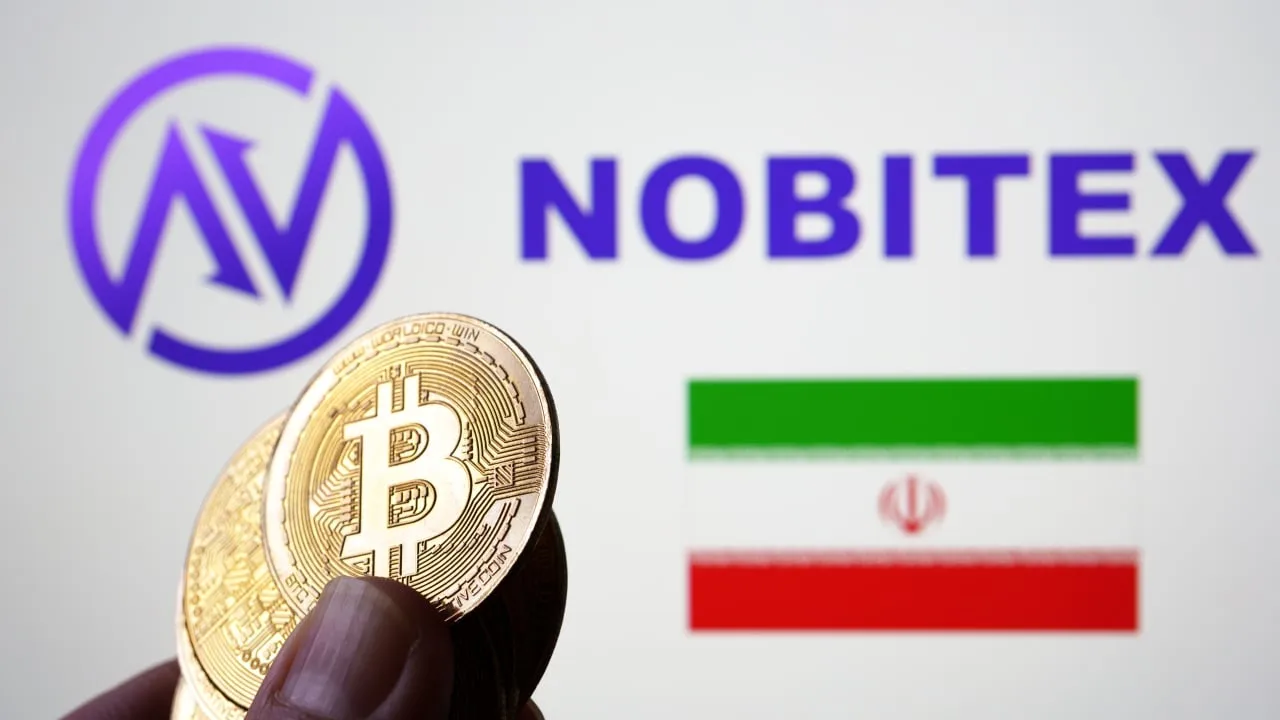
Binance's internal investigators found that a cluster of Iran-linked wallets — designated "Entity A" — had received $1.7 billion in total via businesses and individuals who held Binance accounts. Entity A then sent a portion of those funds to Nobitex, the largest Iranian crypto exchange, and to digital wallets linked to US-designated terrorist groups including the IRGC and the Houthis. A key conduit was a 79-year-old Chinese VIP trader whose account had been allowed to trade freely for months — only flagged after a Seychelles law enforcement agency submitted a terrorism financing request. A second VIP, a 38-year-old Chinese woman, sent nearly $200 million in Tether to an intermediary wallet that relayed the funds to Entity A. Internal documents revealed both VIP accounts were likely accessed from the same device.
The compliance response to the Seychelles request was, by any reasonable standard, delayed. The 79-year-old trader's account was blocked in September 2025 — eight months after the suspicious activity began in January 2025 — and only fully offboarded in January 2026. Former DOJ sanctions prosecutor Robert Appleton, now a partner at Olshan Frome Wolosky, told Fortune: "That's rather shocking that that happened under a monitorship with internal investigators." His surprise carries weight. This was not a firm operating without controls. This was a firm operating under the most intensive compliance oversight available under US law, with independent government-appointed monitors, and the flows still occurred.
"The question is no longer whether a firm has a KYC button. It is whether the institutional incentives surrounding that button allow the people pressing it to act on what they find."
Binance denied that the investigators were terminated for raising compliance concerns, stating in a public blog post that some left "after an internal review found breaches of company data-protection and confidentiality guidelines." The exchange also sued Dow Jones for defamation in March 2026, calling Wall Street Journal reporting on the firings inaccurate. The monitors have maintained public silence throughout. As of the date of this article, the US Treasury has sent a private letter to Binance demanding stronger compliance controls, and Operation Economic Fury — a cross-agency campaign launched in April 2026 to disrupt Iran's financial infrastructure — has sanctioned IRGC-linked wallets and coordinated with Tether to freeze $344 million in USDT on the Tron network.
Part III — The Nested Exchange Typology
Zedcex, Zedxion, and the Architecture of Fictional Legitimacy
To understand how $1.7 billion reached Entity A through Binance without triggering earlier intervention, it is necessary to understand the mechanism that made the flows possible: nested exchanges. The January 2026 OFAC sanctions against Zedcex and Zedxion — two UK-registered exchanges that processed approximately $94 billion in transactions while being registered as dormant companies at Companies House in Britain — provide the clearest documented case study of this typology available.
Investigations by TRM Labs and OCCRP into Zedcex and Zedxion revealed that this architecture — which I term "fictional legitimacy" — is specifically designed to exploit the structural blind spot of KYC-at-onboarding compliance frameworks. The regulated exchange's due diligence is technically complete: it has KYC'd the nested exchange, verified its registration, and confirmed its corporate structure. What it has not done — and what traditional EDD frameworks are not designed to do — is verify whether the leadership is human, whether the trading volume reflects a genuine business purpose, or whether the nested exchange's own clients include sanctioned parties.
Part IV — The Analyst's New Mandate
What EDD Must Now Look Like in 2026
The Binance monitorship case and the Zedcex/Zedxion sanctions together define a new analytical mandate for AML and EDD professionals. The old paradigm — verify identity, screen against sanctions lists, file SARs on transactions that hit rule-based thresholds — is not sufficient for the nested exchange typology. What follows is the updated framework that this case demands.
Part V — Operation Economic Fury
The Geopolitical Context: Iran's $7.78 Billion Crypto Ecosystem
The Binance case does not exist in isolation. It is the highest-profile manifestation of a much larger structural problem: Iran has built a sophisticated, multi-layered crypto ecosystem specifically designed to circumvent Western sanctions. The scale of this ecosystem, documented by Chainalysis and confirmed by Operation Economic Fury, reframes the Binance flows as a symptom rather than a cause.
The implication for compliance professionals is profound. Iran's crypto infrastructure is not operated by individual bad actors making opportunistic transactions. It is state-supported, strategically designed, and specifically engineered to exploit the structural limitations of compliance frameworks built for a different era. When Chainalysis estimates that only 5-10% of Iran-linked crypto activity is detected and actioned by exchanges, the Binance case — where $1.7 billion moved through the world's most scrutinised crypto exchange under active monitorship — suggests the real figure may be even lower.
"That's rather shocking that that happened under a monitorship with internal investigators. Especially in light of Binance's checkered past and prior legal struggles with sanctions evasion, I would have expected the exchange to be more vigilant about suspicious activity of any sort." Appleton's comment carries additional weight given his personal experience prosecuting exactly the kind of Iran-linked flows that passed through Entity A.
Part VI — The Monitorship Paradox
Why the Paradox Matters Beyond Binance
The Binance case establishes a principle that extends far beyond one exchange. I define the Monitorship Paradox as follows: the more effective a compliance programme becomes at detecting historical and ongoing risk, the greater the institutional pressure to suppress or delay the escalation of those findings — because the findings themselves create liability. This paradox is not unique to crypto. It has appeared in pharmaceutical compliance, financial services conduct monitoring, and environmental remediation. But in crypto, where the detection capability gap between what blockchain analytics can identify and what institutions are prepared to act on is particularly wide, the paradox creates acute systemic risk.
The Binance monitorship is, in the end, a mirror. It reflects back at the industry the gap between the compliance infrastructure that has been built and the compliance culture that is required to make that infrastructure effective. For AML analysts, the lesson is not that Binance failed — it is that the architecture of nested evasion has outpaced the architecture of nested detection. Closing that gap is the defining professional challenge of this decade. The goal is no longer simply finding the bad actor. It is uncovering the nested veils they use to remain invisible — and, more importantly, building institutions that are prepared to act on what they find when those veils are lifted.
About the author: Atul Krishnan is a CAMS-certified AML/EDD analyst and founder of ChainSutra, a financial crime intelligence platform focused on digital assets and blockchain compliance.
This article represents the author's independent analysis and does not constitute legal advice. All facts are sourced from public reporting, enforcement records, and regulatory filings.