
Canada's proposed ban on crypto ATMs is not a shield against fraud — it is the surrender of a sovereign financial opportunity, dressed up as consumer protection. The world's vulnerable cannot afford this mistake.
BY ATUL KRISHNAN, CAMS ·
PUBLISHED MAY 6, 2026
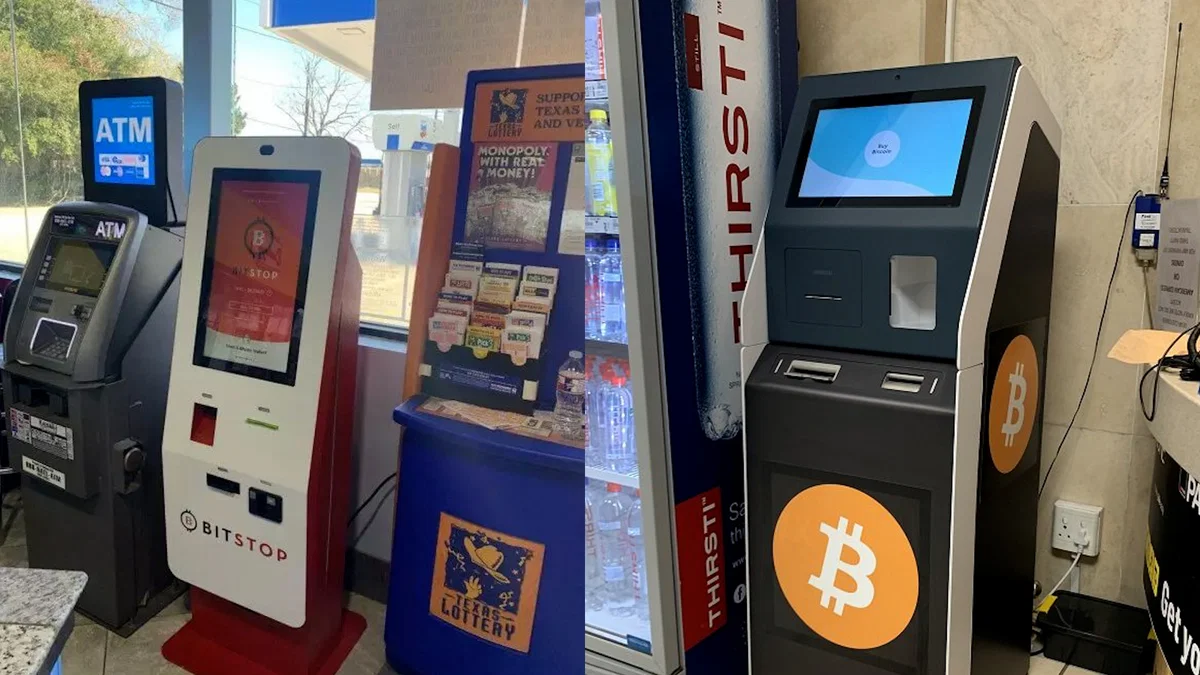
On April 28, 2026, Ottawa issued what the fintech world swiftly labelled its "Digital Guillotine" — a proposal in the Spring Economic Update to ban cryptocurrency ATMs nationwide. The cited justification was swift and stark: over $704 million lost to crypto-related fraud in 2025 alone. For a country that proudly approved the world's first Bitcoin ETF in 2021, the reversal is breathtaking in its bluntness. And as any seasoned AML professional will tell you, prohibition is not a compliance strategy. It is a confession of regulatory failure.
The $704 million figure is alarming. It was designed to be. But numbers without context are political instruments, not analytical ones. Law enforcement itself acknowledges that only 5–10% of fraud incidents are ever reported — meaning the true loss figure could be far larger, and the ATM is the symptom, not the pathogen. The disease is the absence of a robust, federally mandated compliance architecture.
"A ban does not eliminate financial risk. It reroutes it — from a traceable, regulated machine into the shadowlands of Telegram groups and peer-to-peer markets where victims have no recourse."
The Context Ottawa Chose to Omit
Canada's proximity paradox deserves scrutiny. The country hosts nearly 4,000 crypto ATMs — the second-largest deployment on earth. For years, secondary verification on many of these machines was optional, not mandatory. Federal oversight was reactive at best. This wasn't a market that failed; it was a market that was never properly governed. The fraud wave was predictable. The ban is a reaction to a policy vacuum that Ottawa itself presided over.Type your paragraph here
The machines became easy infrastructure for "pig butchering" scams and extortion schemes not because the technology is inherently criminal, but because the regulatory architecture was deliberately minimal. Blaming the ATM for Canada's AML failure is like blaming the highway for drunk driving — and then demolishing the road.Type your paragraph here
How the World's Serious Regulators Responded
While Canada retreats, three major economies have demonstrated, with empirical results, that rigorous compliance beats total prohibition every time.
The Unbanked: Crypto's Invisible Constituency
Here is where Ottawa's analysis fails most catastrophically. The Canadian government's ban is built on a single assumption: that crypto ATMs are a luxury product for the financially literate. Global data in 2025 and 2026 obliterates that assumption with surgical precision.
The leading adopters of cryptocurrency are not Switzerland, the United Kingdom, or Canada. According to the 2025 Chainalysis Geography of Cryptocurrency Report, the frontrunners are India, Pakistan, and Nigeria. These are not wealthy elites speculating on digital gold. These are ordinary citizens using stablecoins — principally USDT — as a digital dollar to protect their savings from local currency inflation, devaluation, and banking exclusion.
In Vietnam — consistently a top-five adopter globally — a significant share of crypto activity is peer-to-peer trade by unbanked individuals with no path into formal banking. In Brazil, street vendors and small merchants use crypto wallets precisely because the formal corporate banking system, with its maintenance fees and documentation thresholds, locks them out from the start.
The crypto ATM, in this context, is not a speculative toy. It is a lifeline.
The Cost of Being Poor
Traditional banking systems are not neutral infrastructure. They are, structurally, more expensive for people with less money. This is not rhetoric; it is World Bank data.
A migrant worker in Toronto, sending money home without a high-tier bank account, walks to a crypto ATM not out of technological bravado but out of economic necessity. Removing that machine does not protect them. It forces them back to the cash-agent networks that charge 10–15% in fees — the very predatory corridors that crypto was built to displace. The ban does not close a loophole. It reopens a wound.Type your paragraph here
The "Speakeasy" Effect: What a Ban Actually Produces
The Canadian government's assumption is that removing machines removes markets. History — from alcohol prohibition to hawala networks — repeatedly disproves this. When the regulated, visible infrastructure is demolished, demand does not disappear. It migrates.
The cash-for-crypto market will move to unregulated peer-to-peer platforms, Telegram groups, and informal exchange networks. These environments have no KYC. No transaction records. No blockchain analytics integration. No cooling-off periods. No consumer protection. A victim of pig-butchering fraud who lost money through a compliant ATM has at least a traceable blockchain trail. A victim who lost money through a Telegram P2P trade has nothing.
The ban does not eliminate risk. It guarantees that when the risk materialises, victims will be invisible.
The Innovation Signal
Canada was a pioneer in this space. The world's first Bitcoin ETF launched here in 2021. The country attracted serious Web3 development talent and institutional interest on the strength of that signal. The proposed ban sends the inverse signal with equal force: that Canada's regulatory posture is reactive, panicked, and unreliable.
Developers and fintech firms operating in this space are mobile. The UAE and Singapore are not merely "crypto-friendly" in rhetoric — they have constructed clear licensing regimes, regulatory sandboxes, and institutional frameworks designed to attract exactly the talent and capital that Canada is now signalling it does not want. Brain drain from a sector is not a theoretical risk. It has a timetable, and that timetable begins the moment the policy signal is read as permanent.
Conclusion: Precision, Not Prohibition
The Canadian government has chosen to treat a compliance failure as a product failure. These are not the same thing. A knife does not become a weapon because a kitchen has no safety rules; it becomes one when the rules are absent and the consequences are ignored.
Australia, the United States, and Switzerland chose precision. They chose to acknowledge that the technology is neutral and that governance is the variable. They built compliance regimes that created accountability without destroying access — and they are winning, both on fraud containment and on innovation.
Canada's proposed ban, however well-intentioned, risks penalising the very people it seeks to protect — the unbanked migrant worker who relies on crypto as their only affordable remittance channel, the compliance professional who has long advocated for stronger oversight, and the Web3 developer who chose Canada precisely because of its progressive fintech history. The guillotine, once dropped, is difficult to reverse. But the blade has not yet fallen. There is still time for Ottawa to step back from prohibition and toward the kind of intelligent, technology-enabled compliance framework that Australia, the United States, and Switzerland have already proven works. The global evidence is clear. The tools exist. The only missing ingredient is the political will to regulate rather than ban.